


Brown capuchin Sapajus apella
Animals in our sanctuary
Siti (female)
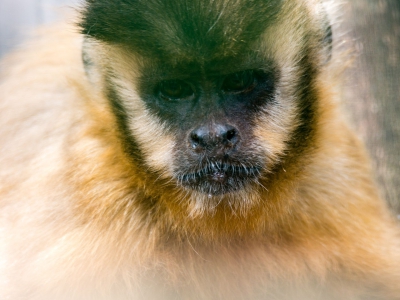
Siti, Salvador and Sarah are monkeys for which a French animal park was looking for a good home. They were temporarily housed there from a bankrupt zoo in Germany.
Salvador (female)
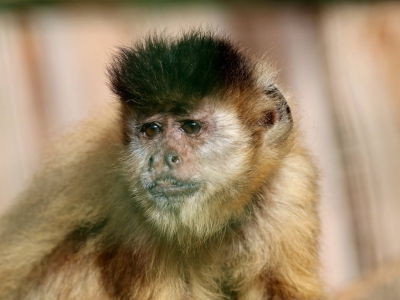
Salvador, Site and Sarah are monkeys for which a French animal park was looking for a good home. They were temporarily housed there from a bankrupt zoo in Germany.
Lena (female)

Lena was held by a private individual in the Czech Republic and then sold in Spain where Lena was confiscated and transferred to the AAP foundation. Now she happily lives back together with her peers.
Petronila (female)

Petronila was found on a parking in Belgium. Tied to a lamppost, left behind by her previous owner, who had probably come to the conclusion that he could not give her the care she actually needed. Now she happily lives back together with her peers.
Téte (Male)
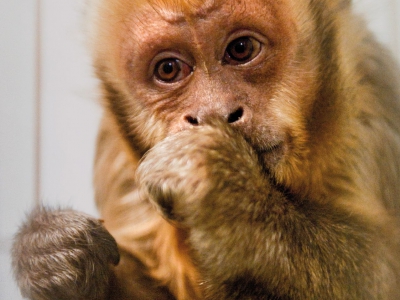
Teté is probably a wild monkey from Bolivia that was kept in a very small cage in Spain by a private person. Because the owner himself actually found that sad, he regularly took Teté “out for a walk” and on such an occasion Teté unfortunately bit a child. After this incident, the owner gave up Téte.


.jpg "Brown capuchin - De Zonnegloed - Animal park - Animal refuge centre")

Appearance
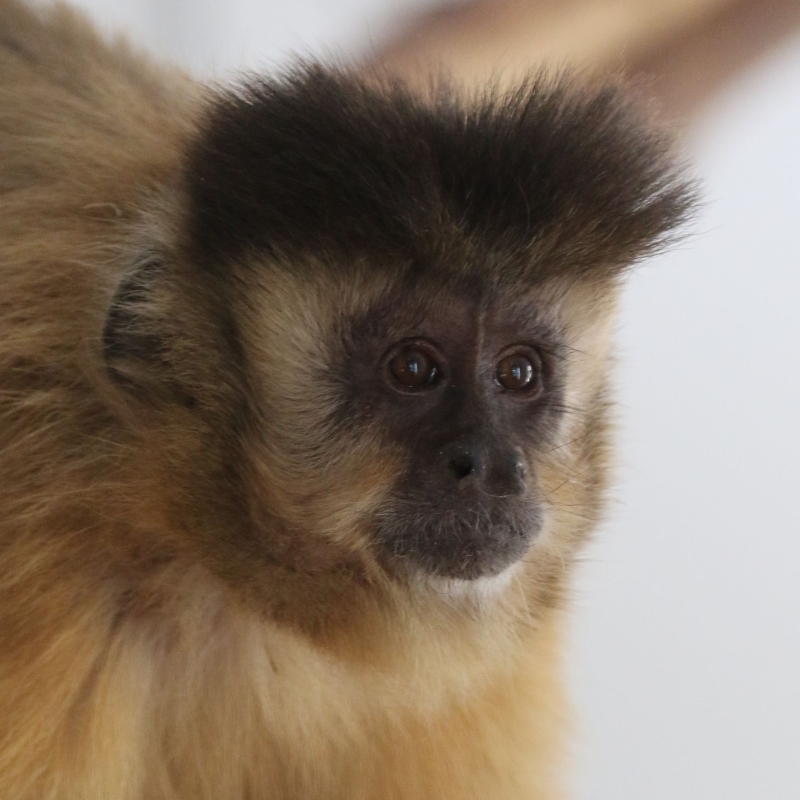
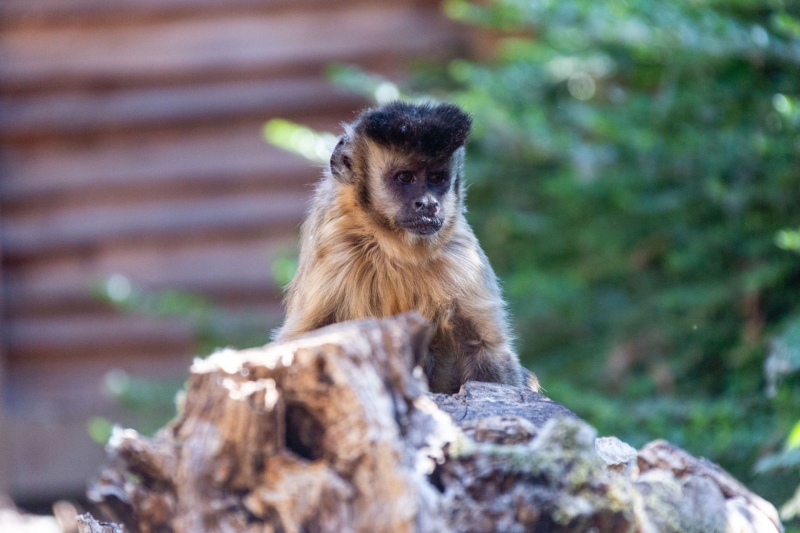
The brown capuchin monkey has a sturdier build than other capuchins, with thick, coarse fur and a relatively short, thick tail. Its fur is predominantly grayish-brown, with a lighter belly and black hands and feet. A distinctive feature is the black "cap" on its head, which extends into sideburns. On top of its forehead, it has a tuft of long, stiff hairs that it can raise like a wig. The tail is strong and functions as a prehensile tail, aiding in climbing.
Males are generally larger than females. An adult male can weigh between 1.9 and 4.8 kg, while a female weighs between 1.3 and 3 kg.
Behavior
Brown capuchin monkeys are diurnal primates that live in trees but frequently descend to the ground to forage or move between trees. They sleep at night in hollow trees or dense branches.
The species lives in groups of 2 to 20 individuals, usually led by a dominant male. Some groups have multiple males, but only one is dominant and mates with most of the females. Within the group, a clear hierarchy exists, with the highest-ranking females leading during foraging.
Diet
The brown capuchin monkey has a varied diet, eating fruits, nuts, leaves, shoots, insects, larvae, eggs, young birds, frogs, and lizards. Nuts and hard fruits are first smashed against a branch or rock to open them.
These monkeys are well known for their ability to use tools. They use stones to crack nuts and sticks to extract insects from tree bark or dig for food. They also use leaves to scoop up water.
Habitat
Brown capuchin monkeys inhabit a wide range of forest types, primarily tropical rainforests, but also drier forests and semi-open areas. They can be found at altitudes of up to 2,700 meters.
Reproduction
Brown capuchin monkeys do not have a strict breeding season, but most births occur during the dry season or early in the rainy season. The dominant male mates with most of the females and guards them during their last fertile days to prevent competition from other males.
After a gestation period of about 180 days, a single infant is usually born, weighing between 200 and 250 grams. The mother carries the infant on her belly for the first few months and later on her back. Other females in the group sometimes assist in caring for the young. The nursing period lasts about nine months. Females reach sexual maturity at around four years, while males take up to seven years and often leave the group upon maturity.
Threats
The brown capuchin monkey is not considered endangered and is common in many parts of South America. They have a wide distribution and adapt well to various environments.
Adopt this Brown capuchin