


Indian scops owl Otus bakkamoena
Animals in our sanctuary
Mumbai
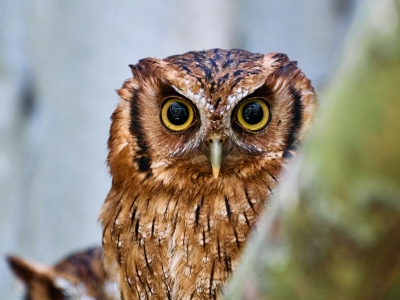
Indian scops owl Mumbai was confiscated by Animal Welfare Belgium, along with other owl species and birds of prey.
Bakkamoena
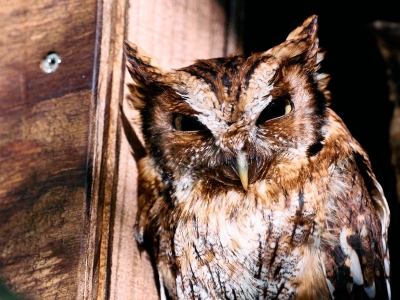
Indian scops owl Bakkamoena was confiscated by Animal Welfare Belgium, along with other owl species and birds of prey.
Chennai
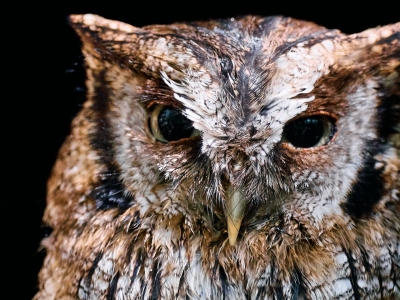
Indian scops owl Chennai was confiscated by Animal Welfare Belgium, along with other owl species and birds of prey.
Kolkata
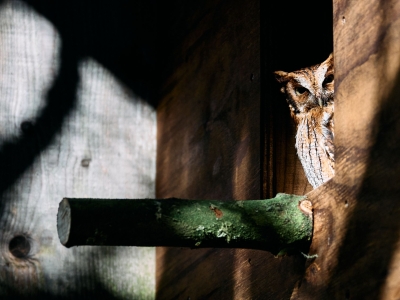
Indian scops owl Kolkata was confiscated by Animal Welfare Belgium, along with other owl species and birds of prey.
Delhi
.jpg)
Indian scops owl Delhi was confiscated by Animal Welfare Belgium, along with other owl species and birds of prey.
Kochi

As a sanctuary, De Zonnegloed follows a non-breeding policy. Nevertheless, in a few cases, unexpected births take place. The animal's young will also stay at the sanctuary. Kochi is one of the animals born here.
Where does he feel most at home?
The Indian Scops-Owl is widely distributed across the Indian subcontinent. Its habitats range from the plains to the foothilss of the Himalayas and include diverse environments like forests, gardens, and urban parks. It thrives in regions with moderate to warm climates.
What's his favourite food?
With a diet consisting of insects, small mammals, and reptiles, the Indian Scops-Owl can adapt to various habitats.
Their keen hearing and silent flight make them highly effective noctural hunters, capable of catching small prey in complete darkness.
Fun fact
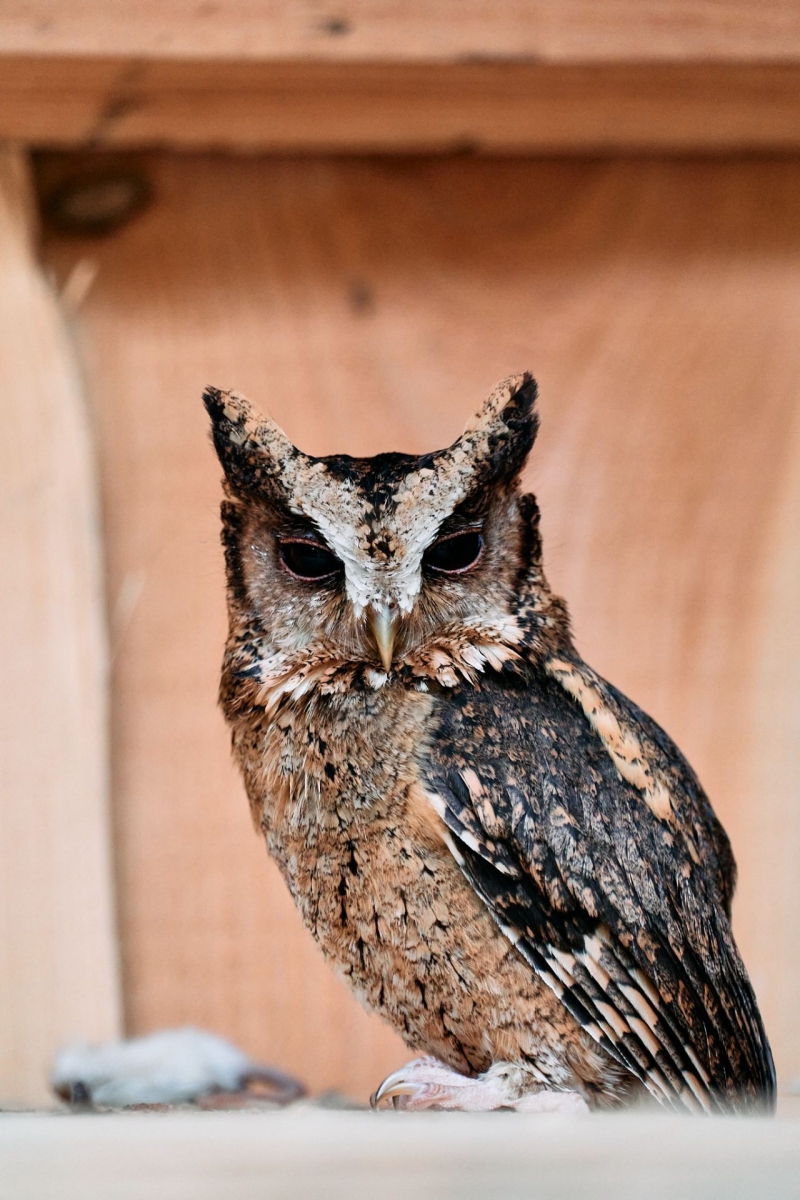
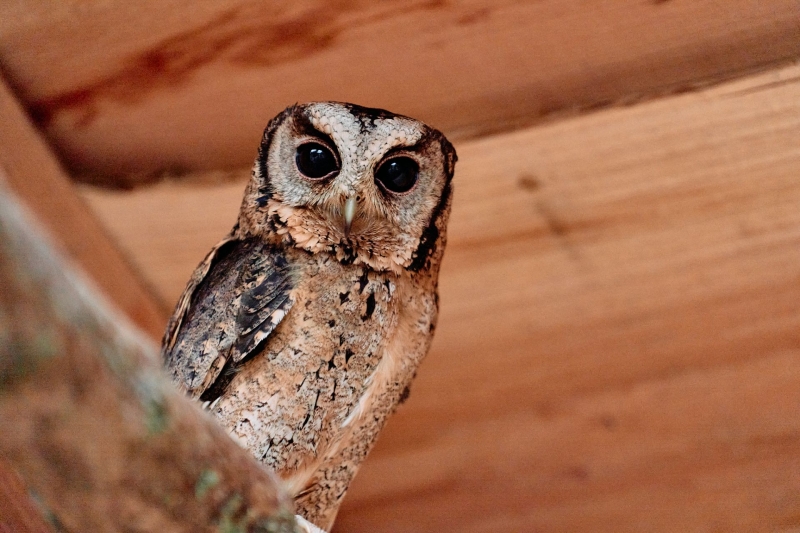
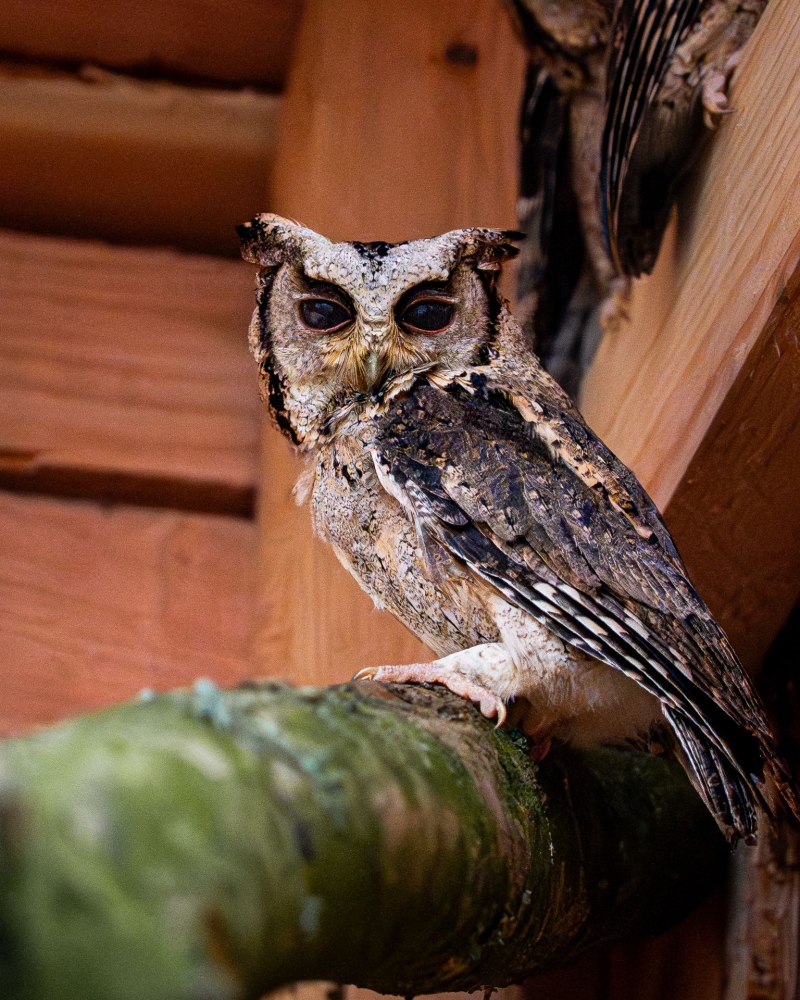
The Indian Scops-Owl is a small, compact bird characterized by its distinctive plumage and pronounced ear tufts. Its body is generally mottled in shades of gray, brown, and white, providing excellent camouflage against tree bark. The facial disk is outlined with a darker border, and its eyes are large, rounded, and typically yellow, a trait common in nocturnal hunters. The wings and back are marked with fine streaks and spots, enhancing their cryptic appearance. There are no significant physical differences between male and female Indian Scops-Owls.
The Indian Scops-Owl is primarily solitary, coming together during the breeding season. They communicate using various calls, including a distinctive, mellow hoot. These nocturnal birds are territorial and may use their calls to establish territory boundaries or attract mates. Cooperation might occasionally occur when defending against predators. They often mimic the calls of other owl species to expand their territory and ward off rivals.
The Indian Scops-Owl is monogamous and engages in intriguing courtship displays, often characterized by the male's vocalizations and visual displays to attract a mate. Breeding occurs during the spring. Social interactions include mutual preening and feeding as pairs form strong bonds. They do not build nests but utilize natural hollows or abandoned nests of other birds. The female lays two to four eggs, which are then incubated for about 24 to 26 days. Both parents are involved in feeding and caring for the chicks.
Conservation
The Indian Scops-Owl is currently classified as "Least Concern" by the IUCN, indicating it is relatively common and not facing an immediate threat of extinction. However, its population is affected by habitat loss due to deforestation and urbanization.
Adopt this Indian scops owl